How to Roll Out a New Leave Policy Across Multiple Entities

Blasko Sarcevic
Published
A practical playbook for introducing a new leave policy across several locations and legal entities without distorting balances or losing employees' trust.
Topic

Topic: a staged rollout instead of a big bang.
How do you roll out a new leave policy across multiple entities?
The safest way to roll out a new leave policy across multiple entities is in stages rather than a single big-bang switch. Start by setting the baseline policy per location as the compliance foundation, then refine it per department, team, or tag without duplicating rules. Pick a single cut-off date when the new policy takes effect and freeze balances at that date so nothing is changed retroactively. Pilot the policy in one entity, compare the computed effective policies against what you expect, and only then roll out to the remaining locations. Communicate early and concretely about what changes for employees, and keep the old policy available as a reference until the switch is confirmed. Done this way, the transition stays traceable, auditable, and reversible.
Before rollout: set the baseline and the cut-off date
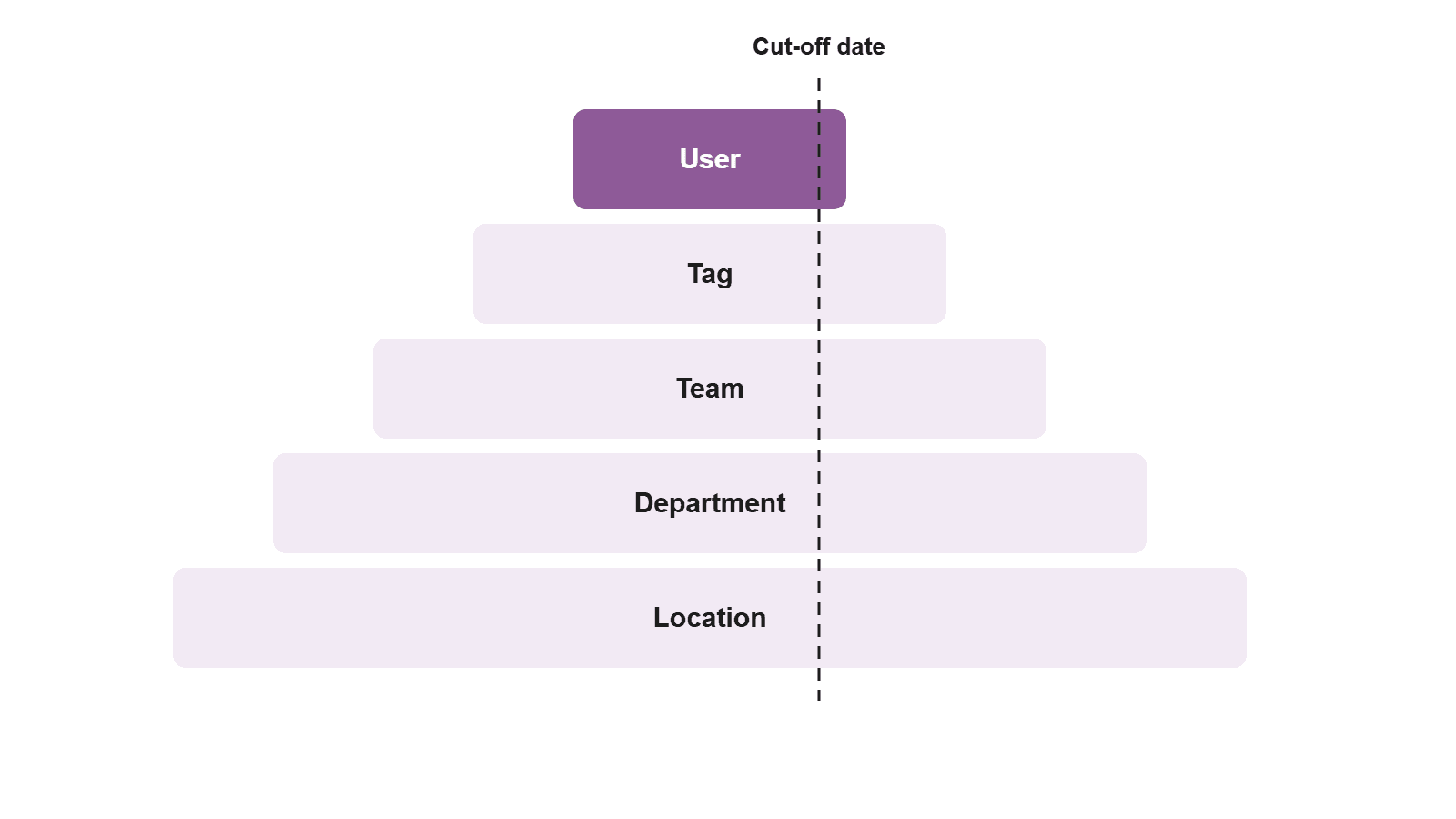
Define the baseline policy per location first, because location is the compliance foundation, then refine per department, team, or tag. One source per policy, assigned many times, prevents contradictory rules.
Pick a single cut-off date when the new policy applies and freeze balances at that date. A shared cut-off date is the single most important safeguard against balances drifting retroactively.
Pilot, validate, then roll out
Introduce the policy in one entity first. Compare the computed effective policies for a sample of employees against what you expect before going further.
Only roll out to the remaining locations after a successful pilot. A staged rollout limits the blast radius if an assumption was wrong and surfaces discrepancies early.
| Phase | Goal | What to watch |
|---|---|---|
| Pilot | Switch one entity | Effective policy vs expectation |
| Validation | Spot-check a sample of balances | No retroactive drift |
| Rollout | Switch remaining locations | Same steps, one cut-off |
| Aftercare | Keep the old policy as reference | Reversible until confirmed |
Communication and traceability
Communicate early and concretely about what changes for employees: entitlement, carry-over, the cut-off date. Unclear communication creates more questions than the change itself.
Keep the old policy available as a reference until the switch is confirmed, and make sure every change stays traceable in the audit trail.
Process-oriented playbook with no statutory figures. Concrete steps and labels depend on your configuration and product version.
Frequently asked questions
- Big-bang or staged rollout?
- Staged. Pilot in one entity, validate the result, and only then roll out to the remaining locations.
- How do I avoid distorting balances during the switch?
- Set a single cut-off date and freeze balances at that date so nothing is changed retroactively.
- At which level do I define the new policy?
- Start with the baseline per location and refine upward per department, team, or tag. One source per policy, assigned many times.
- How do I keep the switch reversible?
- Keep the old policy as a reference until the change is confirmed, and rely on the audit trail for traceability.
About the author
Blasko Sarcevic
Founder, Time-Out Zone
Connect on LinkedIn Connect on LinkedIn
Blasko writes about leave management, policy design, and running time-off operations at scale.
Related
Roll out without balance chaos
See in the live demo how effective policies resolve per employee and how changes cascade.