PTO Payout Calculator

Blasko Sarcevic
Published · Updated
See what your unused PTO is worth when you leave a job, before and after taxes, and whether your state requires the payout.
Topic
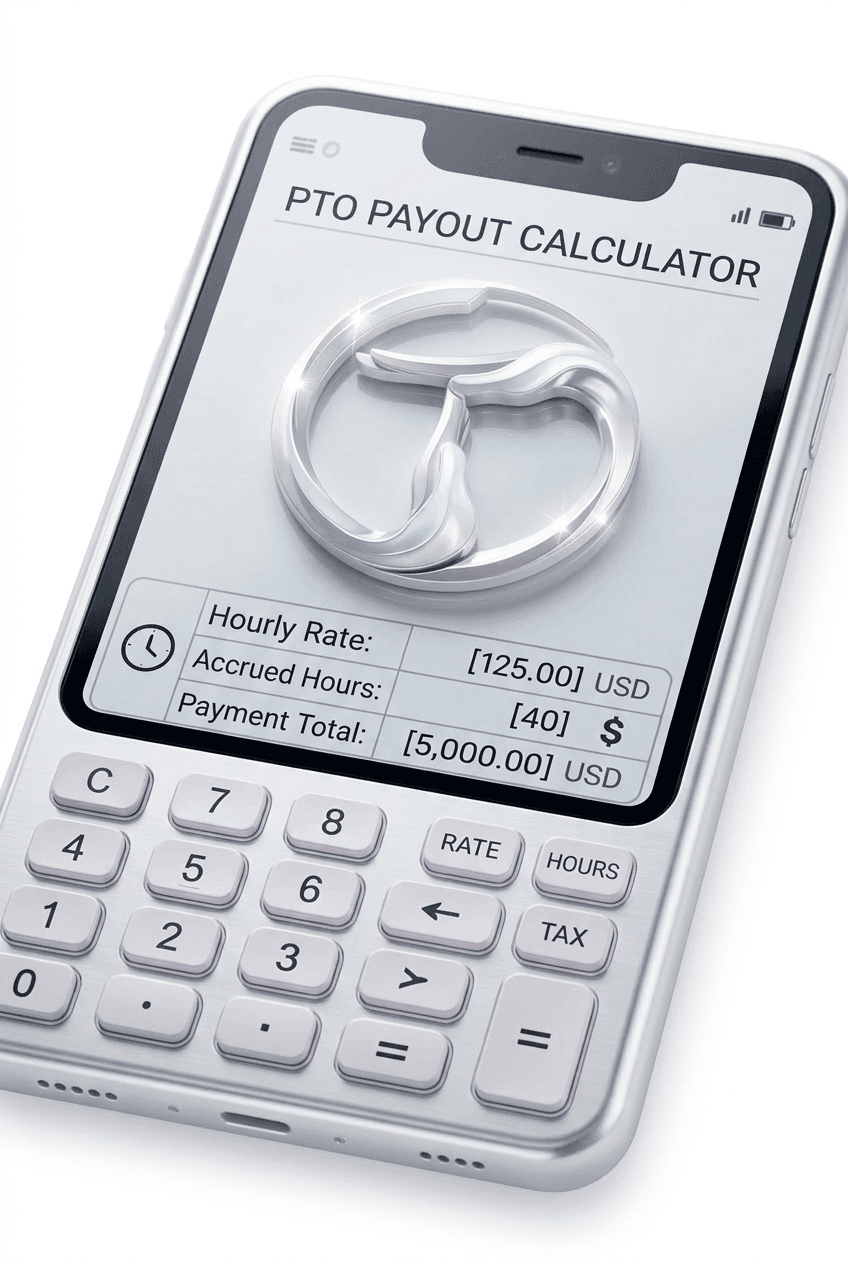
PTO payout calculator: what your unused vacation is worth, before and after tax.
Hourly rate $25.00 · 40 unused hours.
Estimates only, not legal or tax advice. 2026 rates and state rules can change; confirm them before relying on them.
What is a PTO payout?
A PTO payout is the cash value of the paid time off you have earned but not used, paid to you when you leave a job. Employers calculate it by multiplying your unused PTO hours by your pay rate. Whether you are entitled to it depends on your state and your employer's written policy: some states treat accrued vacation as earned wages that must be paid out, while others leave it to company policy.
How to calculate your PTO payout
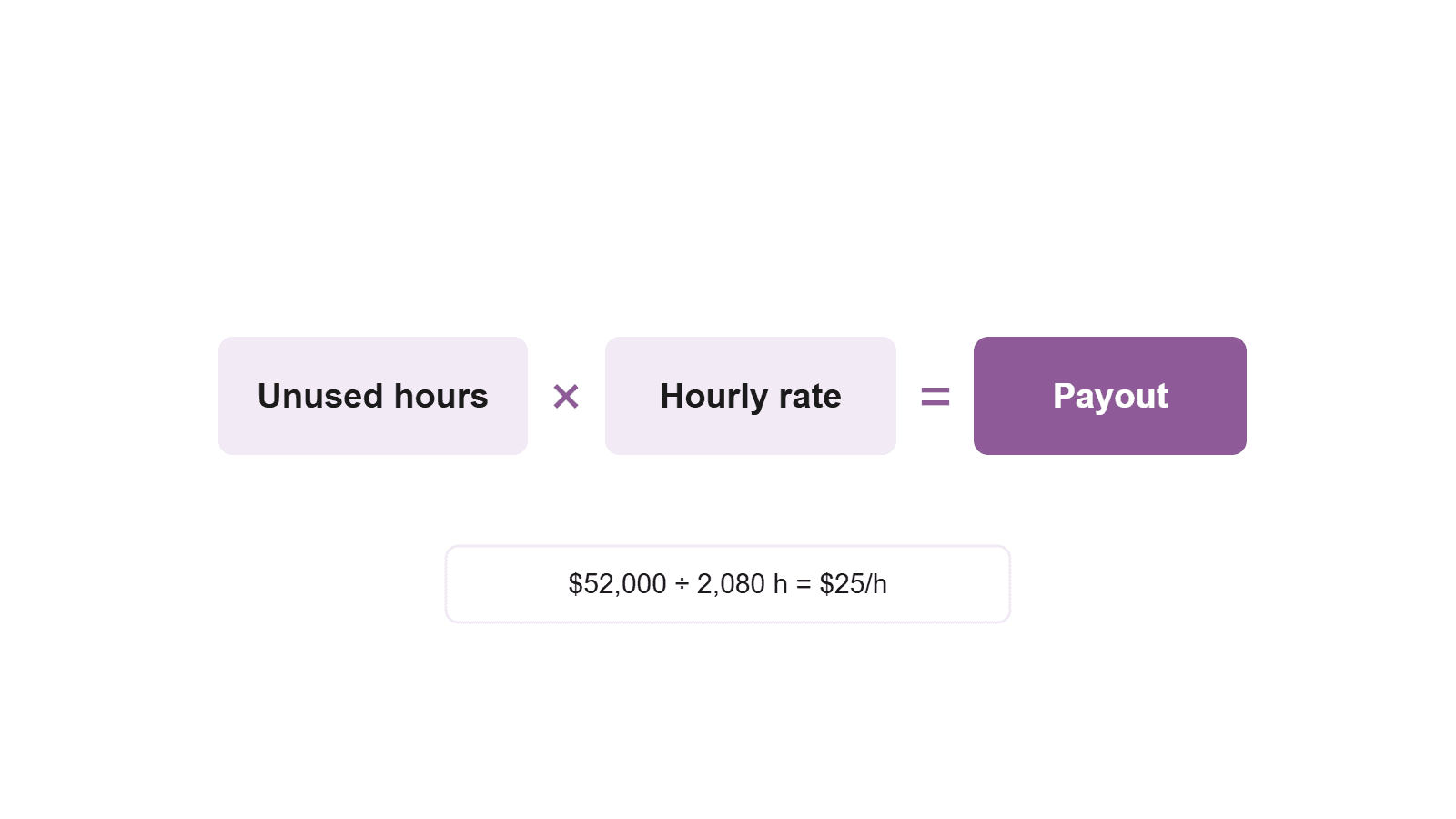
The formula is simple: unused PTO hours x hourly rate = gross payout.
If you are salaried, first convert your salary to an hourly rate by dividing your annual salary by the number of working hours in a year (typically 2,080, or 40 hours x 52 weeks).
Worked example: an employee earns $52,000 a year and has 40 hours (5 days) of unused PTO.
| Step | Calculation | Result |
|---|---|---|
| Hourly rate | $52,000 / 2,080 hours | $25 / hour |
| Gross payout | 40 hours x $25 | $1,000 |
Is a PTO payout taxed?
Yes. A PTO payout is taxable income. The IRS treats it as supplemental wages, so it is typically subject to a flat 22% federal withholding, plus Social Security (6.2%, up to the annual wage base) and Medicare (1.45%). Your state may withhold income tax on top of that, which is why a payout can feel taxed at a higher rate than your normal paycheck.
The after-tax estimate in the calculator applies these federal rates and, where a state publishes a flat supplemental rate, the state rate too. It is an estimate, not tax advice.
Vacation payout at termination: do you get it?
It depends on where you work. In states that treat accrued vacation as earned wages (for example California, Colorado, Illinois, Massachusetts, Montana, and Nebraska), employers generally must pay out unused vacation when you leave, and "use-it-or-lose-it" forfeiture is often restricted. In most other states there is no such statute, so payout depends on your employer's written policy or contract.
Select your state in the calculator to see the rule, or read the state guides below.
PTO payout laws by state
PTO payout rules vary by state. Choose your state for the payout rule, whether use-it-or-lose-it is allowed, and a tailored estimate:
- AlabamaPolicy
- AlaskaPolicy
- ArizonaPolicy
- ArkansasPolicy
- CaliforniaRequired
- ColoradoRequired
- ConnecticutPolicy
- DelawarePolicy
- District of ColumbiaPolicy
- FloridaPolicy
- GeorgiaPolicy
- HawaiiPolicy
- IdahoPolicy
- IllinoisRequired
- IndianaRequired
- IowaPolicy
- KansasPolicy
- KentuckyPolicy
- LouisianaRequired
- MaineRequired
- MarylandConditional
- MassachusettsRequired
- MichiganPolicy
- MinnesotaPolicy
- MississippiPolicy
- MissouriPolicy
- MontanaRequired
- NebraskaRequired
- NevadaPolicy
- New HampshirePolicy
- New JerseyPolicy
- New MexicoPolicy
- New YorkConditional
- North CarolinaConditional
- North DakotaRequired
- OhioPolicy
- OklahomaPolicy
- OregonPolicy
- PennsylvaniaPolicy
- Rhode IslandConditional
- South CarolinaPolicy
- South DakotaPolicy
- TennesseePolicy
- TexasPolicy
- UtahPolicy
- VermontPolicy
- VirginiaPolicy
- WashingtonPolicy
- West VirginiaConditional
- WisconsinPolicy
- WyomingPolicy
Estimates only, not legal or tax advice. Rates and state rules are 2026 figures and should be confirmed before you rely on them. Sources: IRS supplemental wage withholding guidance; state labor agencies; 2026 payroll rate tables.
Frequently asked questions
- How is a PTO payout calculated for salaried employees?
- Divide the annual salary by 2,080 to get an hourly rate, then multiply by the unused PTO hours. Example: $52,000 / 2,080 = $25/hour; 40 unused hours = a $1,000 gross payout.
- Is a PTO payout taxed at a higher rate?
- It is usually withheld at the flat 22% federal supplemental rate plus Social Security, Medicare, and any state tax. That flat rate can be higher than the withholding on a normal paycheck, so the payout often looks "taxed more," even though your actual tax is settled when you file.
- Do you get paid for unused PTO when you quit?
- Sometimes. In states that treat accrued vacation as earned wages, yes. Elsewhere it depends on your employer's written policy. Check your state guide and your employee handbook.
- How much of my PTO payout will I actually receive?
- After federal withholding (22%), Social Security (6.2%), and Medicare (1.45%), plus any state tax, many people keep roughly two-thirds to three-quarters of the gross. Use the after-tax estimate above for your numbers.
About the author
Blasko Sarcevic
Founder, Time-Out Zone
Connect on LinkedIn Connect on LinkedIn
Blasko writes about leave management, policy design, and running time-off operations at scale.
Related
Managing payouts for a whole team?
Time-Out Zone tracks accrual, carryover, and balances automatically, so final payouts are correct without spreadsheets.
Questions about payouts?
See how Time-Out Zone automates payouts, accruals, and approvals for your team.