PTO Accrual Calculator

Blasko Sarcevic
Published · Updated
See how paid time off builds up across the year under accrual, lump-sum, or hybrid models, with accrual frequency, a waiting period, and tenure tiers.
Topic
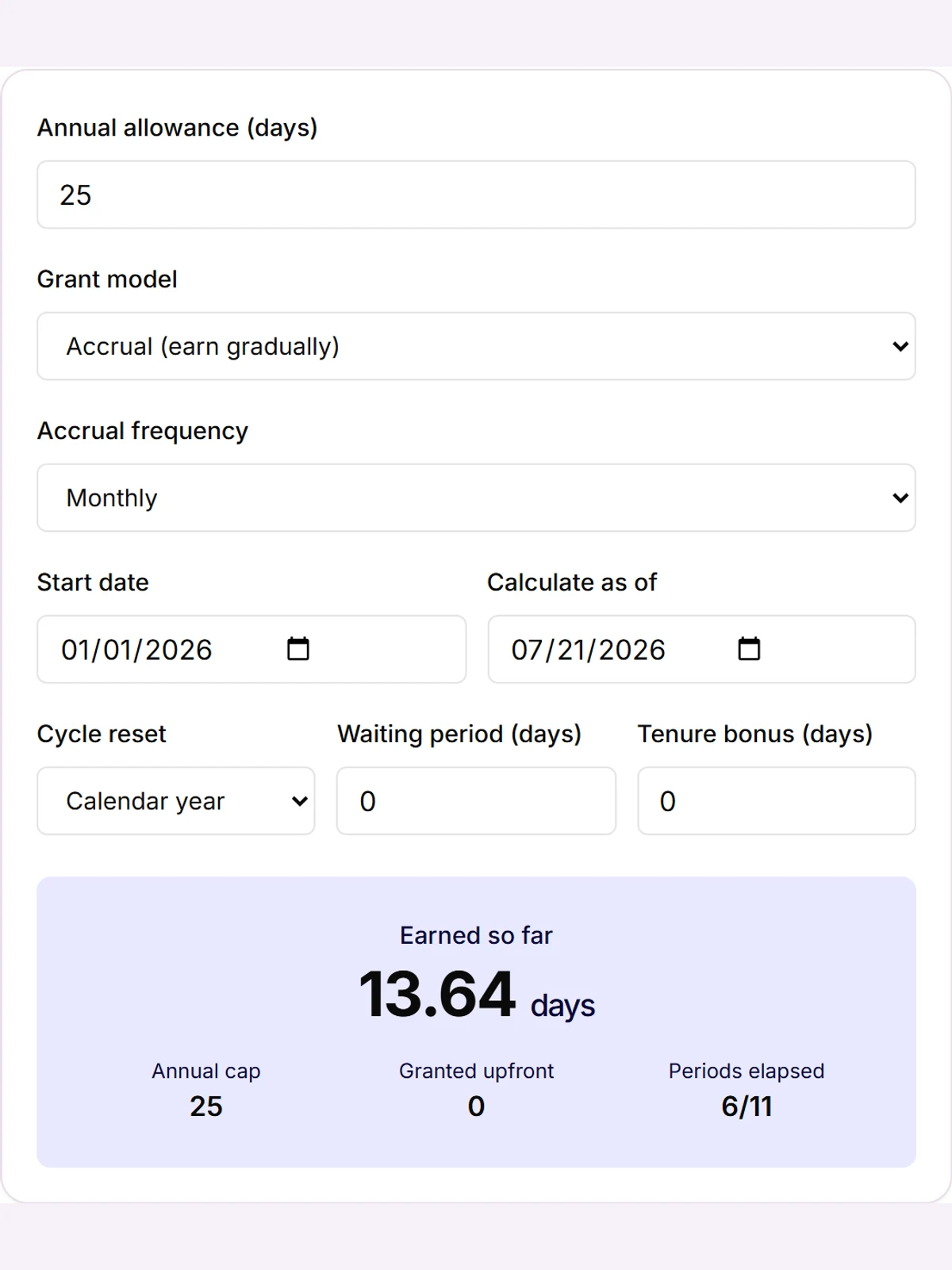
PTO accrual calculator: how much time off is earned so far under accrual, lump-sum, or hybrid models.
Earned so far
20.45 days
- Annual cap
- 25
- Granted upfront
- 0
- Periods elapsed
- 9/11
How does PTO accrual work?
PTO accrual means paid time off is earned gradually over the year instead of being granted all at once. With an accrual model, an annual allowance is divided across accrual periods, for example daily, weekly, biweekly, twice monthly, or monthly, so the balance grows steadily toward the annual cap. A lump-sum model grants the full allowance at the start of the cycle. A hybrid model grants part upfront and accrues the rest. Many policies add a waiting period, a number of days after the start date before accrual or use is allowed, and tenure tiers that increase the allowance after set years of service. This calculator uses the same cycle-aware accrual engine that powers Time-Out Zone, which fills the promised annual amount by the end of the cycle rather than over a flat 365 day denominator. Enter the model, frequency, start date, and an as-of date to see how much is earned so far.
The per-period accrual rate (with a worked example)
The per-period rate is the annual allowance divided by the number of accrual periods in the cycle: 15 days accrued biweekly is 15 ÷ 26 ≈ 0.577 days per period; the same allowance accrued monthly is 15 ÷ 12 = 1.25 days per period. A cycle-aware engine counts the actual periods in the cycle (26 biweekly periods, 12 months) so the balance lands exactly on the promised annual amount by the end of the cycle.
The common spreadsheet shortcut, dividing by 365 and multiplying by elapsed days, drifts from the real per-period schedule, undercounting employees whose accrual posts at the end of each period and overcounting mid-period. Over a year the difference is small per person but compounds into payout and carry-over disputes.
| Frequency | Periods per year | Rate for 15 days/year |
|---|---|---|
| Weekly | 52 | ≈ 0.288 days |
| Biweekly | 26 | ≈ 0.577 days |
| Twice monthly | 24 | 0.625 days |
| Monthly | 12 | 1.25 days |
Waiting periods, caps, and mid-year changes
Waiting periods come in two flavors: accrual starts immediately but usage is locked, or accrual itself is paused until the waiting period ends. The two produce very different balances at the 90-day mark, so the policy must say which one applies.
Accrual caps stop the balance from growing once it reaches a threshold (often 1.5-2x the annual allowance) until the employee uses time. Tenure tiers change the rate mid-cycle when a service anniversary passes: a correct engine switches the per-period rate from the anniversary forward rather than retroactively recalculating the year.
What happens to the accrued balance at year end is a policy and legal question: carry-over rules and use-it-or-lose-it limits vary by state, and some states require unused accrued vacation to be paid out at separation.
Frequently asked questions
- What is the difference between accrual and lump-sum PTO?
- Accrual earns time off gradually across the year. Lump-sum grants the full annual allowance at the start of the cycle. Hybrid grants part upfront and accrues the remainder.
- How does a waiting period affect accrual?
- A waiting period delays when time off starts accruing or can be used. Until the waiting period ends, the balance may stay locked, depending on whether the policy allows accrual during the waiting period.
- What are tenure tiers?
- Tenure tiers increase the annual allowance after set years of service, for example one extra day after three years. The highest qualifying tier applies.
- How do I calculate PTO accrual per pay period?
- Divide the annual allowance by the number of accrual periods in the year: 15 days biweekly = 15 ÷ 26 ≈ 0.577 days per period; monthly = 15 ÷ 12 = 1.25 days. Hours-based policies work the same way with hours instead of days.
- What is an accrual cap?
- A ceiling on the balance: once the employee's accrued time reaches the cap (commonly 1.5-2x the annual allowance), accrual pauses until they use time. Caps are a lawful alternative to use-it-or-lose-it rules in states that prohibit forfeiting accrued vacation.
About the author
Blasko Sarcevic
Founder, Time-Out Zone
Connect on LinkedIn Connect on LinkedIn
Blasko writes about leave management, policy design, and running time-off operations at scale.
Related
Stop calculating leave by hand
Time-Out Zone applies these rules automatically across every employee, location, and policy, with a full audit of how each balance was reached.
Questions about leave tracking?
See how Time-Out Zone automates accruals, balances, and approvals for your team.