Do You Accrue Holiday on Sick Leave? UK Rules Explained

Jovana Avramovic
Published
Statutory holiday keeps building through sickness absence in the UK, including long-term sick leave. How the accrual works, the 18-month carry-over window for leave you could not take, whether you can take paid holiday while off sick, and what happens to the accrued days if you leave.
Topic

Topic: holiday that keeps building while you are off sick.
Do you accrue holiday on sick leave?
Yes. In the UK, statutory annual leave (5.6 weeks, which is 28 days for a five-day week) continues to accrue during sickness absence exactly as if you were working, and it does so for the entire absence, whether that is three days or eighteen months. It makes no difference whether you are receiving Statutory Sick Pay, company sick pay, or, after SSP ends, no pay at all: accrual follows employment status, not pay status. If you cannot take holiday because you are off sick, the 4 weeks of leave derived from EU law carry over into following leave years and remain usable for up to 18 months after the end of the leave year in which they accrued, a rule now written into the Working Time Regulations. You can also choose to take paid annual leave during a sickness absence, at full normal pay, which many people use to bridge income once sick pay runs out. Accrued untaken statutory leave must be paid out if employment ends.
Accrual runs on employment, not on attendance
The 5.6 weeks of statutory annual leave under the Working Time Regulations 1998 accrue because you are employed, not because you are at your desk. Sickness absence therefore does not pause or reduce the entitlement, and this holds for long-term absence too: someone off sick for a full leave year accrues the full year's statutory holiday.
Contractual holiday above the 5.6-week floor is different territory: whether the extra days accrue during sickness depends on the contract. Employers can restrict the enhanced portion, but they cannot touch the statutory minimum, so the first 5.6 weeks always build.
The carry-over rule when sickness blocks your holiday
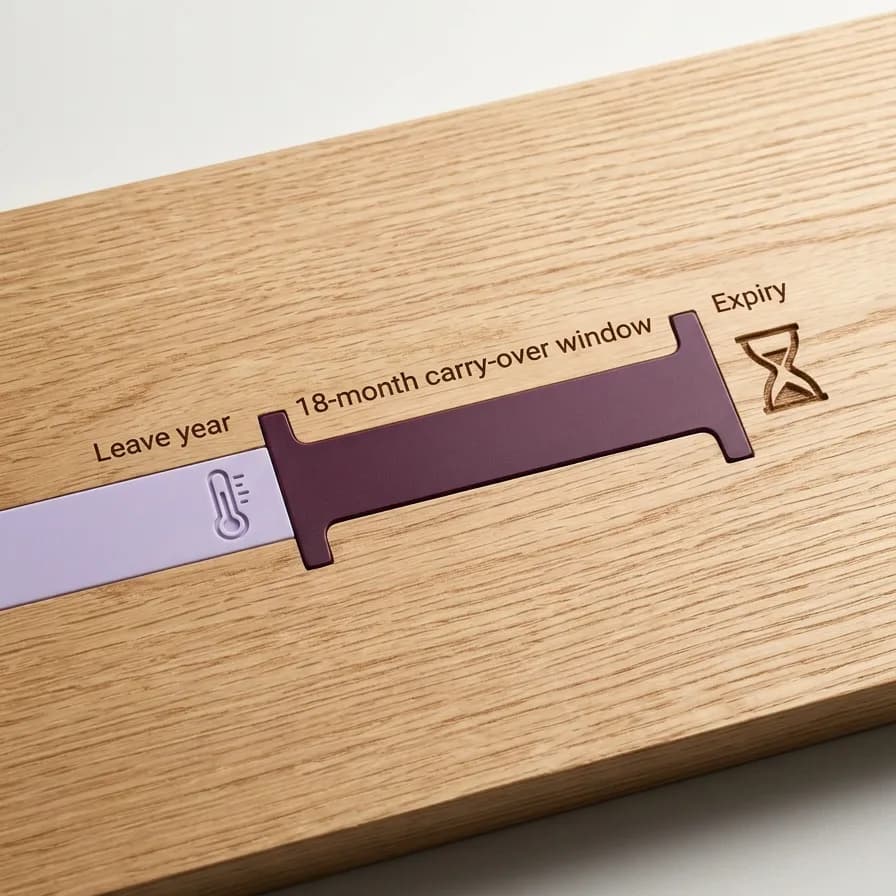
Leave you genuinely could not take because of sickness does not vanish at the end of the leave year. The 4 weeks of EU-derived leave (regulation 13 leave) carry over automatically in that situation and remain available for 18 months after the end of the leave year they belong to. Since the 2023 amendments this long-standing case-law rule is codified in the Working Time Regulations themselves.
The remaining 1.6 weeks of UK-specific additional leave (regulation 13A) are not covered by the automatic sickness carry-over; whether they roll depends on a written agreement with the employer. In practice a returning employee therefore has a guaranteed pot of up to 4 carried weeks per affected year, plus whatever the contract adds.
Taking holiday while you are off sick
You are allowed to take annual leave during a sickness absence, and it is paid at your normal holiday rate, not at the SSP rate. A fit note does not prevent it; sickness and annual leave are separate legal states, and the employee chooses to switch one for the other for the requested days. You cannot receive SSP and holiday pay for the same day, so for the leave days the absence is recorded as holiday.
This is more than a technicality. SSP in 2026/27 pays at most 123.25 pounds per week and runs out after 28 weeks, while holiday pay is a normal week's wages, so taking some accrued leave is a legitimate way to bridge income during a long absence. The reverse situation also matters: if you fall sick during booked holiday, you can convert those days to sick leave and reclaim the holiday for later.
Long-term sickness: how the numbers play out
Take an employee on a five-day week who is off sick from January to December 2026. Over that year they accrue the full 28 statutory days. The 20 EU-derived days carry over and can be taken until 30 June 2028; the 8 additional days depend on the contract. If they return in March 2027, they come back with a substantial paid-leave pot, which is worth planning into the phased return rather than discovering afterwards.
For employers the operational lesson is to keep accrual running in the leave system during sickness and to track the 18-month deadlines per leave year. Silently zeroing a long-term absentee's balance is one of the most reliably losing positions at tribunal, because both the accrual and the carry-over are statutory.
If employment ends while you are off sick
Accrued untaken statutory leave converts to money at termination: the employer must pay in lieu for the outstanding balance, including leave carried over from earlier years under the sickness rule. This applies however the employment ends, including dismissal on capability grounds after long-term absence.
The payment is calculated at the normal holiday pay rate. For someone who exhausted SSP months earlier, the accrued-leave payout is often the largest single amount in the final payslip, which is another reason both sides should keep the balance visible throughout the absence.
Based on the Working Time Regulations 1998 as amended (regulations 13 and 13A, including the codified sickness carry-over and 18-month window) and GOV.UK holiday entitlement guidance; SSP figures reflect the 2026/27 rules. General information, not legal advice.
Frequently asked questions
- Do you accrue holiday on long-term sick leave?
- Yes, for the entire absence. The statutory 5.6 weeks accrue as if you were working, even across a full leave year. Only contractual holiday above the statutory minimum can be restricted, and only if the contract says so.
- Can I take annual leave while on sick leave?
- Yes. You can request annual leave during a sickness absence and receive full holiday pay for those days instead of sick pay. Since SSP is capped and time-limited, this is a common way to bridge income during a long absence.
- How long can holiday carry over after sickness?
- The 4 weeks of EU-derived statutory leave stay usable for up to 18 months after the end of the leave year in which they accrued, when sickness prevented you from taking them. The extra 1.6 UK weeks carry over only if agreed.
- Do I accrue holiday when SSP has run out?
- Yes. Accrual follows your employment, not your pay. After the 28 SSP weeks end, statutory holiday continues to build for as long as the employment lasts, even if you receive no pay at all.
- What happens to accrued holiday if I am dismissed while off sick?
- It must be paid out. Accrued untaken statutory leave, including years carried over under the sickness rule, converts to a payment in lieu at the normal holiday rate when employment ends, regardless of why it ends.
About the author
Jovana Avramovic
Product Excellence, Time-Out Zone
Jovana writes hands-on guides to time-off workflows, calendar tooling, and the rules behind vacation, sick leave, and payouts.
Related
Keep accrual honest through every absence
Time-Out Zone keeps holiday accruing correctly during sickness, tracks carry-over deadlines per leave year, and shows employees and HR the same balance.