What Happens When SSP Runs Out? The 28-Week Limit and What Comes Next

Jovana Avramovic
Published
Statutory Sick Pay stops after 28 weeks even if you are still unwell. What the employer must do at that point, the form SSP1 deadline, the benefits that can replace SSP, and the rights that continue while you remain employed and off sick.
Topic

Topic: the end of SSP and the road after it.
What happens when SSP runs out?
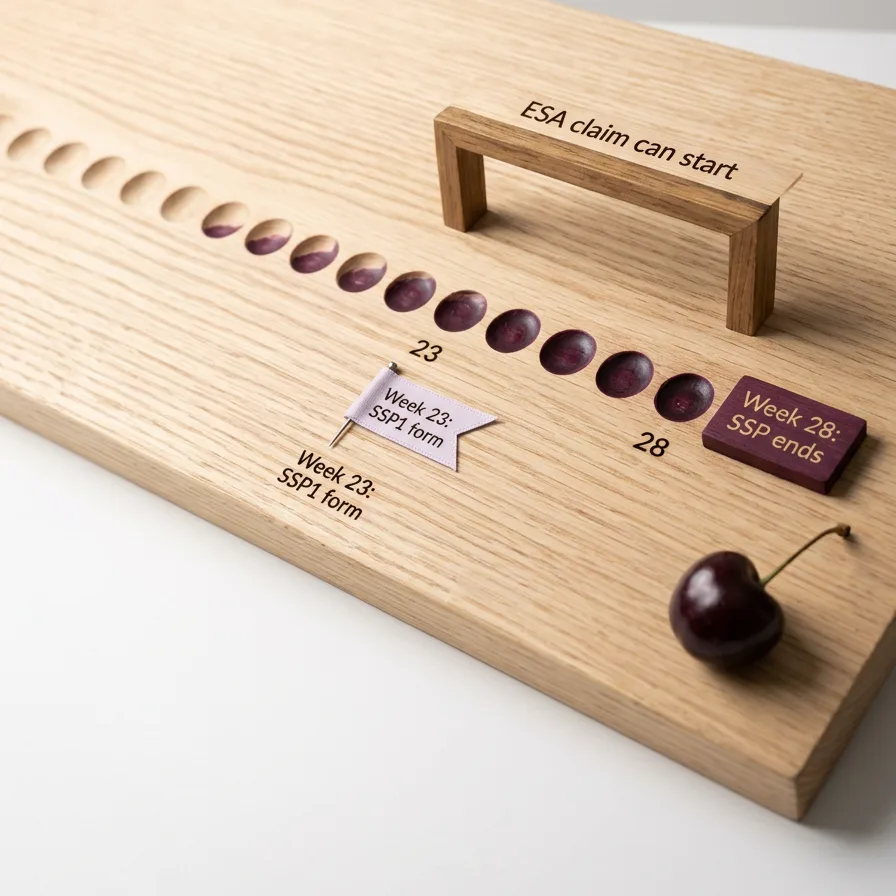
Statutory Sick Pay is payable for a maximum of 28 weeks in a period of incapacity for work, and it simply stops when that limit is reached, even if you are still too ill to work. Your employer must then give you form SSP1, no later than 7 days after SSP ends, or by the start of the 23rd week if the end is already foreseeable. The SSP1 is your evidence for claiming New Style Employment and Support Allowance (ESA), the contributions-based benefit that typically replaces SSP, and you can submit the ESA claim up to 3 months before SSP ends so the payments connect without a gap. Universal Credit can run alongside or instead of ESA depending on your household income and savings. Importantly, running out of SSP does not end your employment: your contract continues, statutory holiday keeps accruing, and any dismissal on long-term sickness grounds must follow a fair capability process.
When exactly does SSP end?
SSP has one hard stop: 28 weeks of payment within a single period of incapacity for work. Since the April 2026 reform it is paid from the first sick day (the three waiting days were abolished), so the 28-week clock starts immediately and runs while you remain off sick.
Linked absences share the clock. Two sick spells separated by 56 days or fewer count as one period of incapacity, so a return to work of a few weeks does not reset your entitlement; the weeks already paid still count against the 28. To start a fresh 28 weeks with the same employer, you need more than 56 days between sick spells. SSP also ends earlier than the 28-week mark if your employment ends, since it is paid through payroll by the employer.
Form SSP1: the handover document
When SSP ends but your sickness does not, your employer is required to complete form SSP1 and give it to you. The deadlines are specific: within 7 days of SSP actually ending, or, where the end date is known in advance, on or before the start of the 23rd week of SSP. The same form is used at the start of a sickness if you were never eligible for SSP at all.
The SSP1 matters because it states why and when SSP stopped, which is exactly what the Department for Work and Pensions needs to process a benefits claim. If your employer has not provided it as the end of entitlement approaches, ask payroll directly; a missing SSP1 delays money you are entitled to.
New Style ESA and Universal Credit
New Style Employment and Support Allowance is the usual successor to SSP. It is based on your National Insurance record over roughly the last two to three tax years rather than on household income, and it is claimed from the DWP, not from your employer. You can apply up to 3 months before your SSP ends, and doing so early is the single best way to avoid an income gap, because ESA can then start the day after SSP stops. After the claim, ESA runs through an assessment phase before a work capability assessment decides the longer-term rate.
Universal Credit is the means-tested route: it looks at household income, savings, and housing costs, and it can be paid alongside New Style ESA (the ESA amount is deducted from the UC award) or on its own if your NI record is too thin for ESA. Whether either applies to you depends on personal circumstances, so check both on GOV.UK or with Citizens Advice rather than assuming.
What your employer may still owe you
SSP is the statutory floor, not the whole picture. If your contract includes occupational or company sick pay, that scheme has its own duration and can continue after SSP ends; check the sick pay clause in your contract or staff handbook for the exact weeks and rates. Some employers also carry group income protection insurance, which typically starts paying a percentage of salary precisely when long absences exhaust other cover, but usually only if the absence is reported into the scheme early, so ask HR about it well before week 28.
Your statutory employment rights also continue untouched. Annual leave keeps accruing through the entire sickness absence, and taking accrued holiday during sickness is allowed and paid at your normal rate, which can bridge income after SSP ends. How accrual during sickness works, including the carry-over rules for leave you could not take, is covered in its own article linked below.
Long-term absence and your job
Reaching the end of SSP does not end your employment and is not, by itself, a reason for dismissal. An employer considering dismissal for long-term sickness must follow a fair capability process: obtaining up-to-date medical evidence, consulting you, and considering reasonable adjustments or alternative roles, especially where the condition may amount to a disability under the Equality Act 2010.
In practice the healthier path for both sides is a managed return: occupational health input, a fit note with may-be-fit-for-work adjustments, and a phased return that rebuilds hours gradually. If you are the employer in this scenario, track the absence and the return plan in one place; if you are the employee, engage with occupational health referrals, since they usually work in favor of keeping the role open.
Based on GOV.UK guidance on Statutory Sick Pay, form SSP1, and New Style ESA as of the 2026/27 rules (SSP payable from day one, maximum 28 weeks, 56-day linking). This is general information, not legal or benefits advice; entitlements depend on personal circumstances.
Frequently asked questions
- What is form SSP1 and when should I receive it?
- SSP1 is the form your employer must complete when SSP ends before your sickness does, or when you do not qualify at all. It has to reach you within 7 days of SSP ending, or by the start of the 23rd week where the end is foreseeable, and it is the evidence the DWP uses for an ESA claim.
- Can SSP start again after the 28 weeks are used up?
- Not within the same period of incapacity. Sick spells separated by 56 days or fewer are linked and share the 28-week limit. A new entitlement with the same employer requires a gap of more than 56 days between sick spells; a new employer comes with a fresh entitlement.
- Can I be dismissed when my SSP runs out?
- Not automatically. Long-term sickness dismissals must follow a fair capability process with medical evidence, consultation, and consideration of adjustments; where the condition amounts to a disability, the Equality Act requires reasonable adjustments first. The end of SSP changes your pay, not your employment status.
- Do I still accrue holiday after SSP ends?
- Yes. Statutory holiday accrues for the whole sickness absence regardless of whether SSP is still being paid, and you can take accrued leave during sickness at full pay. Leave you could not take because of sickness can carry over into the next leave year.
- Should I wait for SSP to end before claiming ESA?
- No. You can claim New Style ESA up to 3 months before your SSP ends, and claiming early lets the payments start the day after SSP stops. Waiting creates an avoidable income gap while the claim is processed.
About the author
Jovana Avramovic
Product Excellence, Time-Out Zone
Jovana writes hands-on guides to time-off workflows, calendar tooling, and the rules behind vacation, sick leave, and payouts.
Related
Track long absences without spreadsheets
Time-Out Zone records sickness absences with their running duration, keeps holiday accruing correctly through them, and gives HR the timeline they need for SSP1 and return-to-work planning.