Unlimited PTO Explained: How It Works, Pros and Cons

Blasko Sarcevic
Published · Updated
What unlimited PTO actually means, why companies adopt it, where it quietly backfires, and the guardrails that make it work.
Topic

Topic: unlimited PTO compared with a fixed allowance.
What is unlimited PTO and how does it work?
Unlimited PTO is a paid time off model with no fixed annual allowance: employees take as much vacation as their work allows, and each request still goes through normal approval. There is no balance to accrue, no carry-over, and (because no time is banked) usually no payout of unused days at termination. In practice, the limit shifts from a number to a process: manager approval, team coverage, and blackout periods decide what is possible. The model's best-documented catch is that without guardrails, employees often take less time off than under a fixed allowance, because no defined entitlement means no reference point for what is acceptable. That is why mature unlimited PTO policies set a minimum number of days everyone is expected to take, keep tracking time off even without a balance, and apply consistent approval criteria across teams. In some jurisdictions, statutory minimum leave must still be tracked separately underneath the flexible layer.
How unlimited PTO works in practice
Unlimited PTO does not mean nobody asks. Requests still flow through a manager and must fit around projects, coverage, and busy periods. What disappears is the account: there is no annual allowance to accrue, roll over, or pay out.
The model replaces a numeric limit with a process limit. Approval chains, coverage rules, and blackout periods decide when and how much time off is workable, which is why the approval workflow matters more under unlimited PTO, not less.
Why companies offer unlimited PTO
The two most common motives are recruiting and accounting. As a benefit, unlimited PTO signals a results-over-presence culture and stands out in offers. On the books, it removes the accrued-vacation liability: where no time is banked, nothing has to be paid out when someone leaves.
The liability point is concrete. In US states that treat accrued vacation as earned wages, unused balances must be paid out at termination, a real cost that unlimited PTO structurally avoids. Which states require that payout is covered, state by state, in our PTO payout calculator pages.
The pros of unlimited PTO
Done well, the model has genuine advantages for both sides.
- Flexibility: time off follows life and workload, not a remaining balance.
- No use-it-or-lose-it pressure and no year-end vacation rush.
- Less administration of carry-over, expiry, and payout edge cases.
- A strong recruiting signal, especially for senior candidates.
- No accrued-vacation liability building up on the balance sheet.
The cons and hidden catches
The criticism is well documented: without clear guardrails, many employees take less time off, not more. Responsibility shifts to the individual, and people who feel insecure ask less often.
There is also a fairness risk (approval practice can drift apart between managers) and a financial one for employees: unused days that would be paid out under an accrual policy simply do not exist here.
- Employees often average fewer days off than under a fixed allowance.
- Unclear expectations create anxiety and social comparison.
- Approval standards can vary widely between teams.
- No payout of unused flexible days at termination.
- Without tracking, nobody sees who is not taking enough time off.
Unlimited PTO and payout at termination
Under a traditional accrual policy, unused vacation is a banked asset, and several US states require it to be paid out when employment ends. Under unlimited PTO there is no bank, so there is normally nothing to pay out, one reason finance teams like the model.
The edge cases matter, though. If a company converts from accrual to unlimited, existing balances do not vanish; they must be paid out, used, or explicitly transitioned at a cut-off date. And policy wording that promises specific amounts of time can create obligations regardless of the 'unlimited' label.
Do people actually take more time off?
Platform data and industry surveys mostly point the other way: employees under unlimited policies often take the same or fewer days than peers with fixed allowances. The mechanism is psychological: With no defined entitlement, there is no anchor for how much is acceptable, and nobody wants to be the person who takes too much.
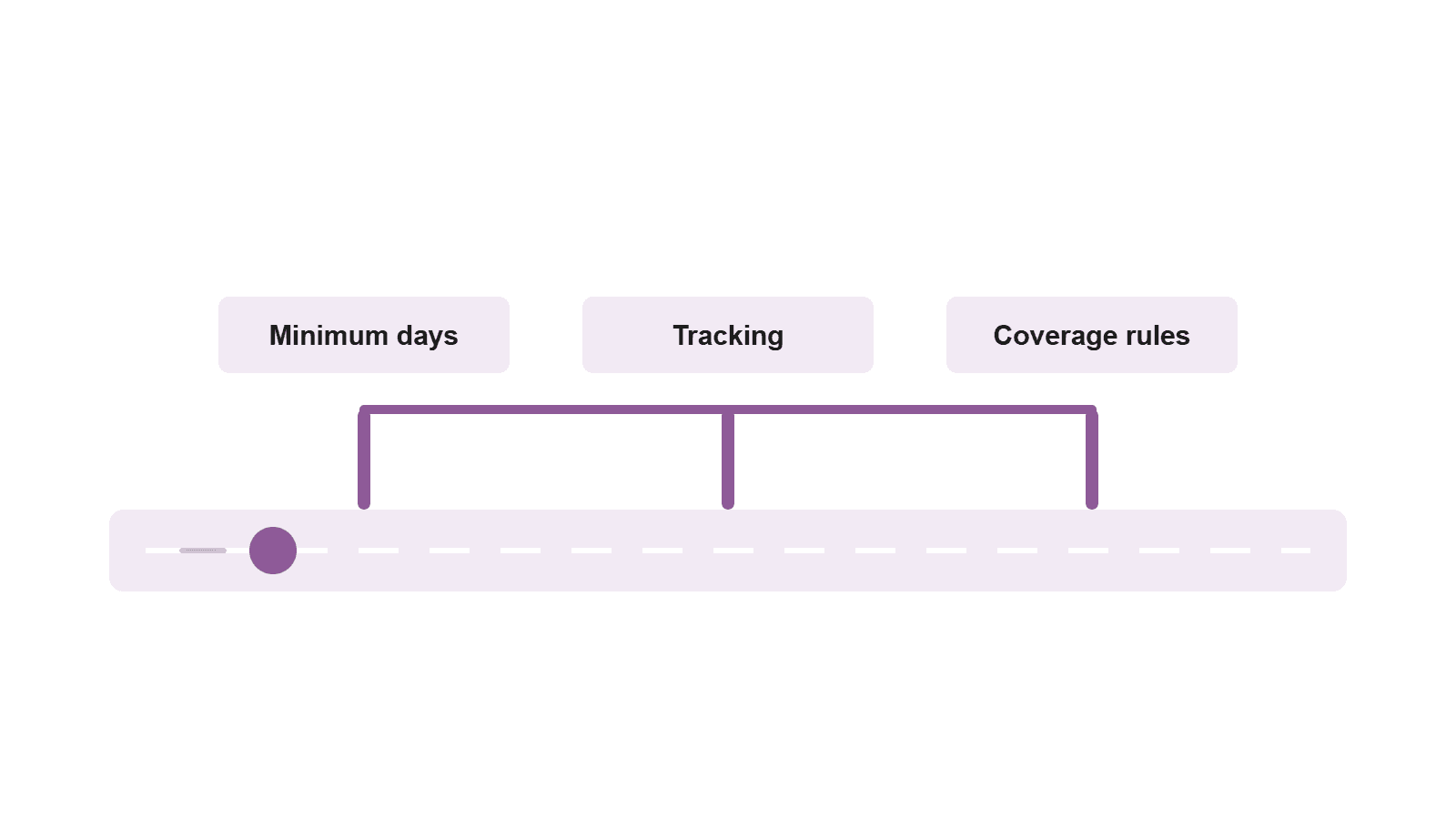
The most effective countermeasure is a minimum: the company states a number of days everyone is expected to take each year, and managers are nudged when team members fall well below it.
Guardrails that make unlimited PTO work
Unlimited PTO rarely fails as an idea; it fails as an unstructured practice. These guardrails have proven themselves:
- Set a minimum number of days per year and follow up on it.
- Keep tracking time off: visibility matters even without a balance.
- Use coverage and conflict rules so teams are never absent at once.
- Apply consistent approval criteria across managers and teams.
- Track any statutory minimum leave separately where law requires it.
Unlimited PTO vs a traditional accrual policy
The decision is a trade between simplicity and control:
| Dimension | Unlimited PTO | Fixed allowance |
|---|---|---|
| Amount of time off | By agreement, no cap | Defined annual entitlement |
| Carry-over and expiry | Not applicable | Needs carry-over and expiry rules |
| Payout at termination | None for flexible days | Unused days often paid out |
| Administration | Low, but tracking still recommended | Higher (balances, carry-over, payout) |
| Main risk | Under-use without guardrails | Year-end rush and expiry disputes |
Is unlimited PTO right for your team?
The model fits organizations with high trust, outcome-based work, and managers who actively watch for under-use. It fits poorly with shift work, strongly seasonal businesses, and teams where every absence creates an immediate staffing gap.
If you switch, treat it as a policy migration: pick a cut-off date, resolve or pay out existing balances cleanly, keep any statutory minimum tracked underneath, and communicate the new expectations explicitly, including the minimum days you want people to take.
Usage claims are based on industry surveys and HR-platform reports rather than a single study; US payout rules vary by state and are documented per state in the PTO payout calculator pages. This article explains common US practice at a general level and is not legal advice; state laws and company policies differ, so confirm specifics for your state.
Frequently asked questions
- What does unlimited PTO mean?
- A paid time off model with no fixed annual allowance. Employees take as much vacation as work allows, with each request still going through normal approval.
- Does unlimited PTO get paid out when you leave?
- Usually not: No balance is banked, so there is nothing to pay out. Balances that existed before a switch to unlimited PTO still have to be handled at the transition, under the payout rule of the employee's state.
- Is unlimited PTO really unlimited?
- No. Requests still need approval and must fit team coverage and busy periods. The limit moves from a number to a process.
- What are the main pros and cons of unlimited PTO?
- Pros: flexibility, no expiry pressure, less admin, no accrued liability. Cons: people often take less time off, approval practice varies between teams, and unused days are never paid out.
- Do employees take more vacation with unlimited PTO?
- Often not. Surveys and platform data suggest usage is the same or lower than with fixed allowances, which is why mature policies set a minimum number of days.
About the author
Blasko Sarcevic
Founder, Time-Out Zone
Connect on LinkedIn Connect on LinkedIn
Blasko writes about leave management, policy design, and running time-off operations at scale.
Related
Run unlimited PTO with guardrails
Time-Out Zone tracks unlimited leave types without an allowance, keeps statutory minimums separate, and flags coverage conflicts before approval.