Washington Paid Leave Calculator: WA PFML Benefits (2026)

Blasko Sarcevic
Published
What Washington Paid Family and Medical Leave pays per week in 2026, for how long, who qualifies, and whether your job is protected, with the calculator preset to Washington.
Topic
Washington Paid Family and Medical Leave: paid family and medical leave program.
87% of your $1,000.00 weekly wage under Washington Paid Family and Medical Leave.
Waiting period: One unpaid waiting week per claim, except for bonding leave, leave in the postnatal period, and military exigency leave.
Figures effective: January 1, 2026. The cap (90 percent of the state average weekly wage) resets every January 1; a claim that starts in one year keeps that year's cap even if it runs into the next.
Official calculator and claim filing: Washington Employment Security Department, Paid Family and Medical Leave.
Estimates only, not legal, tax, or benefits advice. The state agency calculates the actual benefit from the wages your employers reported, and caps change at least once a year; confirm the current figures before you plan around them.
How much does WA PFML pay in Washington?
Washington Paid Family and Medical Leave pay 90 percent of your average weekly wage up to half the state average weekly wage ($915), plus 50 percent of the rest, between a $100 floor and a $1,647 cap for claims that start in 2026. A worker on $1,500 a week receives about $1,116, 74 percent of pay. Benefits run for up to 12 weeks for your own health condition, 12 weeks for family leave, and 16 weeks combined. Waiting period: one unpaid waiting week per claim, except for bonding leave, leave in the postnatal period, and military exigency leave. To qualify you need at least 820 hours worked in Washington in the qualifying period, across all employers. The program is funded by a 1.13 percent premium split roughly 71 percent employee and 29 percent employer, with employers under 50 paying no employer share. The cap resets every January 1, and a claim keeps the cap of the year it started. Figures effective January 1, 2026, checked September 14, 2026.
How is the Washington weekly benefit calculated?
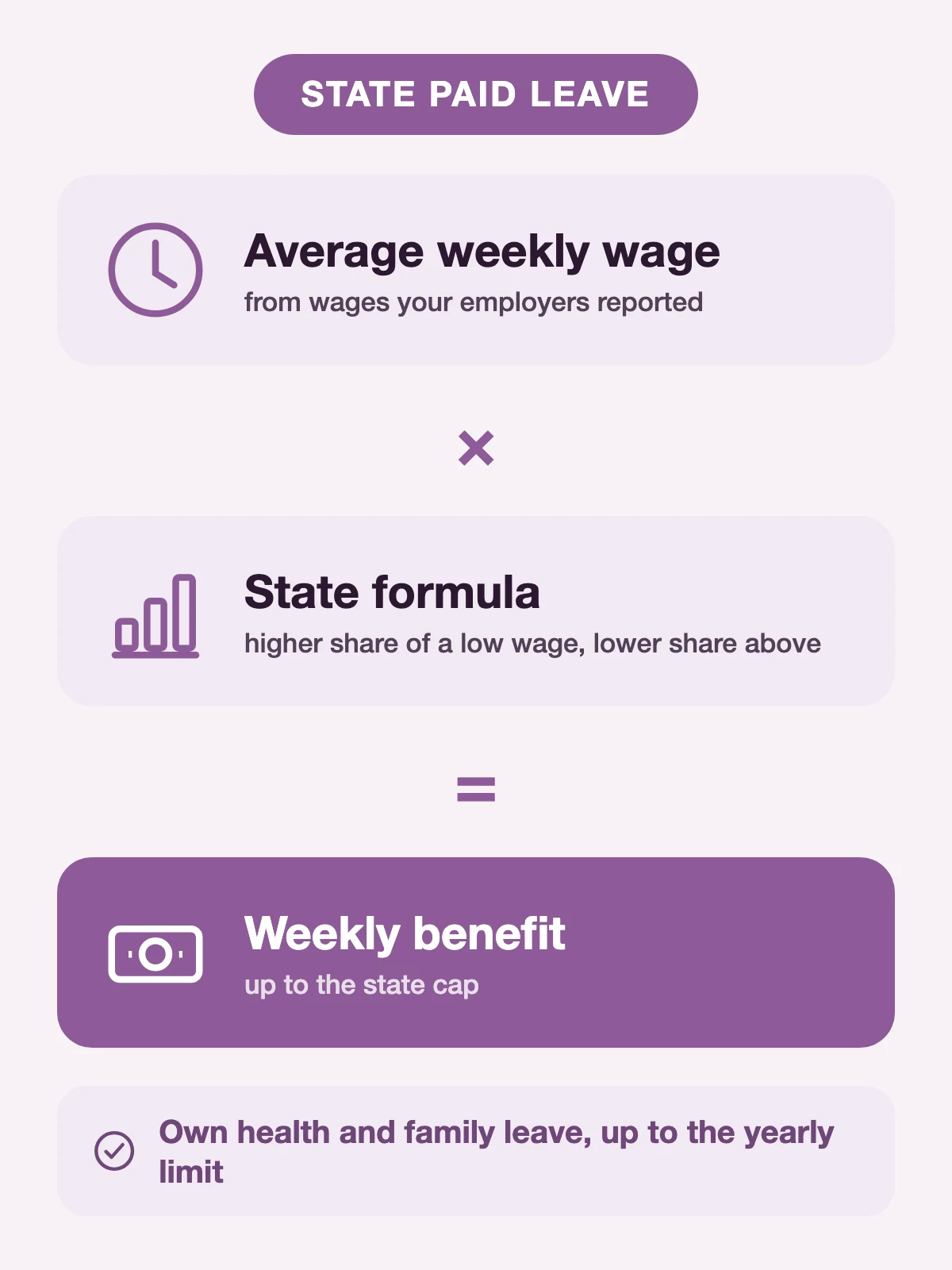
Washington Paid Family and Medical Leave pay 90 percent of your average weekly wage up to half the state average weekly wage ($915), plus 50 percent of the rest, between a $100 floor and a $1,647 cap for claims that start in 2026. The state works out your average weekly wage from the wages your employers reported for the base period, not from your current pay stub, so a recent raise or a change of hours may not be reflected yet.
Three examples with the current figures. A Washington worker earning $800 a week receives about $720, which is 90 percent of pay. At $1,500 a week the benefit is $1,116, or 74 percent. At $3,000 a week it is $1,647, because the $1,647 weekly maximum applies, or 55 percent. Anyone earning about $2,570 a week or more in Washington receives the maximum, so the share of pay replaced keeps falling as wages rise above that. The weekly floor is $100, or your full wage if you earn less than that.
| Average weekly wage | Estimated weekly benefit | Share of wage replaced |
|---|---|---|
| $800 | $720 | 90% |
| $1,500 | $1,116 | 74% |
| $3,000 | $1,647 (maximum) | 55% |
How many weeks does WA PFML pay?
Up to 12 weeks of medical or family leave, up to 16 weeks combined, and up to 18 weeks when a pregnancy or birth complication causes incapacity. The calculator caps the weeks you enter at the limit for the leave type you choose and shows the total, so you can see at a glance what 16 weeks would be worth at your wage.
Waiting period: One unpaid waiting week per claim, except for bonding leave, leave in the postnatal period, and military exigency leave. Where a program has an unpaid first week, most employers let you cover it with sick leave or PTO, and several states require them to allow it if you ask.
Who qualifies for WA PFML?
At least 820 hours worked in Washington during the qualifying period (about the last 12 to 15 months), across all employers. You do not need to be employed when you apply.
Who pays for it: 1.13 percent of gross wages up to the Social Security wage base in 2026: employees pay 71.43 percent of the premium, employers 28.57 percent; employers with fewer than 50 employees are exempt from the employer share. The benefit itself comes from the state fund or an approved private plan, not from your employer's payroll, which is why it continues if you change jobs during the base period and why it is separate from any company parental or sick leave you also have.
Is your job protected while you receive WA PFML?
From January 1, 2026, the program protects the job of an employee with at least 180 calendar days at an employer with 25 or more Washington employees (15 or more from 2027, 8 or more from 2028), with no minimum hours; health coverage continues during protected leave (RCW 50A.35.010, as amended by HB 1213).
Washington has no general state family and medical leave statute separate from the paid program, so beyond the protection described above the job-protection floor is the federal FMLA. The federal FMLA adds 12 weeks of unpaid, job-protected leave for employees with 12 months of service and 1,250 hours at an employer with 50 or more employees, and where both apply the paid benefit and the FMLA run at the same time rather than back to back.
When do the Washington figures change?
The cap (90 percent of the state average weekly wage) resets every January 1; a claim that starts in one year keeps that year's cap even if it runs into the next. The figures on this page took effect on January 1, 2026 and were checked on September 14, 2026 against the amounts published by Washington Employment Security Department, Paid Family and Medical Leave. Statute: RCW Title 50A.
Estimates only, not legal, tax, or benefits advice. Each state agency calculates the actual benefit from wages your employers reported, and caps, formulas, and contribution rates change at least once a year. Confirm the current figures with the agency named on the page before you plan around them. Sources: Washington Employment Security Department, Paid Family and Medical Leave (https://paidleave.wa.gov/); RCW Title 50A; IRS Revenue Ruling 2025-4. Figures effective January 1, 2026, checked September 14, 2026.
Frequently asked questions
- How much does WA PFML pay per week?
- 90 percent of your average weekly wage up to half the state average weekly wage ($915), plus 50 percent of the rest, between a $100 floor and a $1,647 cap for claims that start in 2026. At $1,500 a week that is about $1,116; the maximum is $1,647 for claims from January 1, 2026.
- How long can I be paid under WA PFML?
- Up to 12 weeks of medical or family leave, up to 16 weeks combined, and up to 18 weeks when a pregnancy or birth complication causes incapacity.
- Is there a waiting period for WA PFML?
- One unpaid waiting week per claim, except for bonding leave, leave in the postnatal period, and military exigency leave.
- Who pays for WA PFML?
- 1.13 percent of gross wages up to the Social Security wage base in 2026: employees pay 71.43 percent of the premium, employers 28.57 percent; employers with fewer than 50 employees are exempt from the employer share.
- Are Washington paid leave benefits taxable?
- Under IRS Revenue Ruling 2025-4, family leave benefits (bonding, caregiving, military exigency) are taxable income and the state or its insurer reports them. Medical leave benefits for your own condition are taxable only in proportion to the share of the premium your employer paid; the part attributable to your own after-tax contributions is not. Your state agency issues the tax form and can tell you which rule applied to your claim.
About the author
Blasko Sarcevic
Founder, Time-Out Zone
Connect on LinkedIn Connect on LinkedIn
Blasko writes about leave management, policy design, and running time-off operations at scale.
Related
Tracking leave across several states?
Time-Out Zone keeps balances, carryover, and approvals in one place, so state leave and company PTO stay consistent without spreadsheets.
Questions about paid leave?
See how Time-Out Zone tracks absences, balances, and approvals for teams in more than one state.