FMLA Certification and Paperwork: Forms, Deadlines, and Your Doctor (2026)

Jovana Avramovic
Published
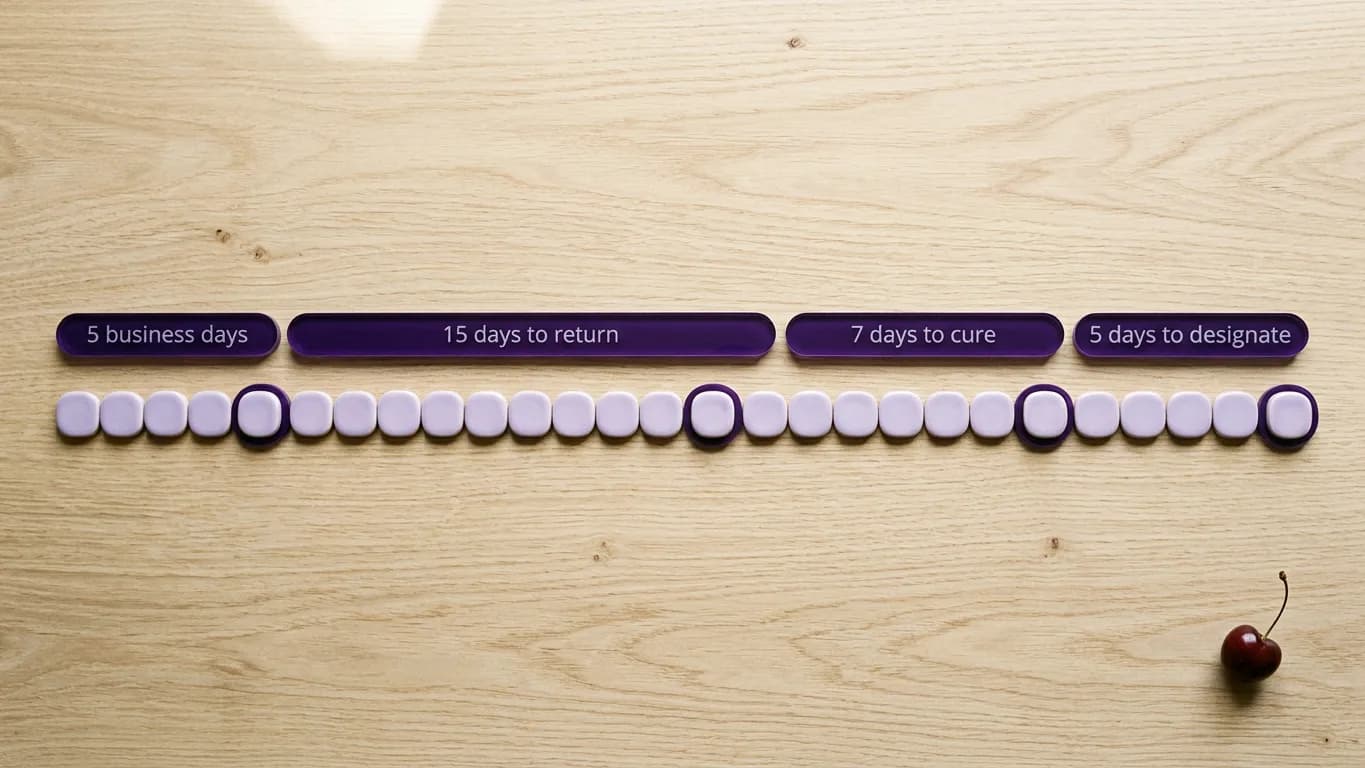
The FMLA runs on paperwork with a clock attached: five business days for the employer to ask, fifteen calendar days to return the form, seven more to fix what is missing. Which WH form applies, what your doctor writes and what nobody may ask, how recertification works, and what HR keeps.
Topic

Topic: the certification clock.
What is FMLA certification?
FMLA certification is the paperwork that turns a leave request into protected leave. When an employee asks for leave for their own serious health condition or a family member's, the employer may require a medical certification from a health care provider, usually on Department of Labor form WH-380-E or WH-380-F, though any form that asks no more than the regulations allow is valid. The employer must request it within five business days of learning about the leave, the employee then has at least 15 calendar days to return it, and an incomplete form earns a written list of what is missing and seven more calendar days to fix it. The certification covers the medical facts, the expected start and duration, and for intermittent leave an estimate of frequency. It does not have to state a diagnosis. Once the paperwork is in, the employer has five business days to say in writing whether the leave counts as FMLA. Source: 29 CFR 825.305 to 825.307.
Which FMLA forms do you actually need?
The Department of Labor publishes a set of optional forms, and most employers use them because they ask exactly what the regulations permit and nothing more. Two of them go to a health care provider. WH-380-E is the certification for the employee's own serious health condition and WH-380-F is the one for a family member's condition. Three more are notices the employer sends: WH-381 tells the employee whether they are eligible and lists their rights and responsibilities, WH-382 is the designation notice that says whether the leave is approved as FMLA and how much will be counted, and for military families WH-384 covers qualifying exigency leave while WH-385 and WH-385-V certify a current servicemember's or a veteran's serious injury or illness.
None of these forms is mandatory. An employer may use its own, or a leave administrator's, as long as it does not ask for information beyond what 29 CFR 825.306 allows. That matters in the other direction too: if the employer's form asks for more than the regulation permits, the employee may answer only what the regulation requires, and a form that goes further is not grounds to deny leave. The current versions are always at dol.gov/agencies/whd/fmla/forms; the versions on an employer's intranet are often a revision behind, which is harmless as long as the questions match.
A sensible habit for employees is to download the WH-380 directly, take it to the appointment, and hand HR the completed original, keeping a copy. For an employer, the habit is to send WH-381 and the blank WH-380 together, on the same day, so the 15-day clock and the eligibility notice start from one dated event.
| Form | What it is | Who completes it | When |
|---|---|---|---|
| WH-380-E | Certification of the employee's own serious health condition | Health care provider | Within 15 calendar days of the employer's request |
| WH-380-F | Certification of a family member's serious health condition | Family member's health care provider | Within 15 calendar days of the employer's request |
| WH-381 | Notice of eligibility and rights and responsibilities | Employer | Within 5 business days of the leave request |
| WH-382 | Designation notice: approved, denied, or more information needed | Employer | Within 5 business days of having enough information |
| WH-384 | Certification of qualifying exigency for military family leave | Employee, with supporting documents | Within 15 calendar days of the request |
| WH-385 and WH-385-V | Certification of a servicemember's or veteran's serious injury or illness | Authorized health care provider | Within 15 calendar days of the request |
What are the deadlines for FMLA paperwork?
There are four clocks, and they run in sequence. First, when an employee gives notice of a need for leave, the employer has five business days to respond with the eligibility notice and, if it wants one, the request for certification. If the leave was unforeseeable and has already started, the five days run from the day the leave began. Second, the employee has at least 15 calendar days from that request to return the completed certification, and the employer must allow more time if the employee made diligent, good-faith efforts and the provider could not finish in time. Third, if the form comes back incomplete or insufficient, the employer must say so in writing, list exactly what is missing, and give at least seven calendar days to cure it. Fourth, once the employer has enough information to decide, it has five business days to issue the designation notice.
Here is how that looks on a real calendar. Priya, a warehouse shift lead, tells her manager on Monday, March 2, 2026 that she needs surgery at the end of the month and about four weeks to recover. HR sends her the WH-381 eligibility notice and a blank WH-380-E on Tuesday, March 3, so her certification is due by Wednesday, March 18. Her surgeon's office returns it on Monday, March 16, but leaves the expected duration blank. HR writes to her on Tuesday, March 17, naming the missing field, and the cure period runs to Tuesday, March 24. The corrected form arrives on Friday, March 20, and HR issues the WH-382 designation notice on Monday, March 23, the next business day and well inside the five-day limit. Her leave begins Monday, March 30 with every date documented.
The clocks protect both sides. An employee who returns a complete certification on day 14 has done everything the law requires, and an employer that sits on it for three weeks has not. An employer that asks for certification on day 12 after the notice, rather than day 5, is outside the rule unless it has since developed a reason to question the leave, and the employee's 15 days still run from the late request, not from the original notice.
How do you get your doctor to fill out FMLA paperwork?
Start by taking the form to the right person. Under the regulations a health care provider is broader than a physician: doctors of medicine and osteopathy, podiatrists, dentists, clinical psychologists, optometrists, chiropractors for a spinal subluxation shown on X-ray, nurse practitioners, nurse-midwives, clinical social workers, and physician assistants all count, as does any provider your employer's group health plan accepts for benefits. A nurse practitioner who has managed your condition for two years is a better certifier than a specialist you saw once, because the form asks for facts the provider actually knows.
Bring three things to the appointment: the blank form, a plain description of your job or the list of essential functions if your employer gave you one, and a clear idea of what you are asking for. If the leave is a block of time, the provider needs the expected start date and duration. If it is intermittent, the provider needs to estimate frequency and duration of episodes or appointments, and vague answers like as needed are the single most common reason a form comes back marked insufficient. Ask for a realistic range and, if the condition is unpredictable, say so on the form; the regulations accept an estimate.
Expect a fee and a wait. Many practices charge for completing forms, and the FMLA does not require your employer to pay for the initial certification, so budget for it. Practices also take a week or more, which is why the 15 days can feel short. If the office tells you it will be late, tell HR in writing before the deadline: the regulations extend the time when the delay is outside your control and you have made a diligent effort. Sending the form through the patient portal, following up by phone after five days, and asking the front desk rather than the physician about status all shorten the wait.
What can an employer ask for, and what is off limits?
The regulation lists what a certification may contain: the provider's contact details and specialty, the approximate date the condition began and its probable duration, the medical facts sufficient to support the need for leave, and, depending on the type of leave, whether the employee cannot perform job functions, whether the family member needs care, and the schedule for treatment or intermittent absences. Medical facts may include a diagnosis, and providers often give one, but the regulation does not require it. An employer that refuses a form because the diagnosis line is blank, when the other facts support the need for leave, is asking for more than the law allows. California goes further and prohibits asking for the diagnosis at all under CFRA.
Contact with the provider is tightly controlled. Once the employee has had the chance to cure any deficiency, the employer may contact the provider only to authenticate the form, meaning confirm that the provider completed it, or to clarify handwriting or the meaning of an answer. That contact must come from a human resources professional, a leave administrator, or a management official, never the employee's direct supervisor. Clarification beyond what the form says requires the employee's HIPAA authorization, and an employee who declines to sign one is entitled to have the form judged as written, at the risk of it being found insufficient.
Two other rules trip up employers. The Genetic Information Nondiscrimination Act treats an FMLA certification as a lawful request for medical information only if the employer includes the safe-harbor language telling the provider not to supply genetic information or family medical history, so that sentence belongs on every request. And a certification for the employee's own condition may not be used to demand information about a spouse or child; the family form has its own scope.
What if the certification is incomplete, or the employer doubts it?
Incomplete and insufficient mean different things. A form is incomplete when a required entry is blank, and insufficient when the entries are there but vague, non-responsive, or contradictory. In either case the employer's only first move is a written notice naming the problem and a cure period of at least seven calendar days. Denying leave at this stage, or sending the form straight to a second opinion, skips a step the regulation makes mandatory.
If the form is complete and the employer still has reason to doubt its validity, it may require a second opinion from a provider it chooses and pays for, as long as that provider is not one it employs or contracts with regularly, unless access to health care in the area is so limited that there is no alternative. While the second opinion is pending, the employee is provisionally entitled to leave and benefits. If the two opinions disagree, a third provider approved jointly by employer and employee gives a final and binding opinion, again at the employer's expense, including the employee's reasonable travel costs. On request the employer must hand over copies of the second and third opinions within five business days.
An employee who never returns a certification, after the 15 days and any cure period have passed, loses FMLA protection for that leave. For foreseeable leave the employer may delay the start until the form arrives; for leave already under way, the days after the deadline are not FMLA-protected until the certification is in, and if it never comes, none of the absence is. That is the practical reason to treat the 15 days as a real deadline rather than a suggestion.
How often can an employer ask for recertification?
For an ongoing condition the default is no more often than every 30 days, and only in connection with an absence. If the original certification states a minimum duration longer than 30 days, for example a pregnancy or a six-month course of treatment, the employer must wait until that period ends before asking again, with one exception: it may always request recertification every six months in connection with an absence, whatever the stated duration. Recertification is at the employee's expense, and unlike the original certification it cannot be sent for a second or third opinion.
Three situations allow an earlier request. The employee asks for an extension of leave. Circumstances described in the certification have changed significantly, such as absences that last longer or come more often than the provider estimated. Or the employer receives information that casts doubt on the stated reason for the absence, the textbook case being intermittent absences that cluster around weekends and holidays. In that last case the employer may give the provider a record of the absence pattern and ask whether it is consistent with the condition, which is the one moment the regulations let an employer describe an employee's attendance to a doctor.
Separately from recertification, when a condition runs past one leave year the employer may require a fresh medical certification at the start of the next year. That new certification is treated like an original one, so the 15-day rule applies and second and third opinions are available again. Employers who use a rolling 12-month period should note that the new leave year for a given employee starts on the anniversary of their first FMLA day, not on January 1.
What is a fitness-for-duty certification?
When an employee returns from leave for their own serious health condition, the employer may require a note from the provider stating that the employee is able to resume work. Three conditions apply. The employer must have a uniformly applied policy of requiring such certifications from similarly situated employees returning from comparable leave; it must have told the employee in the designation notice that one would be required; and the certification may address only the condition that caused the leave. If the employer wants the provider to confirm the employee can perform the essential functions of the job, it must have given the employee a list of those functions no later than the designation notice and said so.
The employer may authenticate or clarify a fitness-for-duty certification under the same rules that apply to the original form, but it may not seek a second or third opinion on it, and the employee pays for it. If the certification is properly required and not provided, the employer may delay reinstatement until it arrives, and an employee who neither provides it nor asks for more time can lose the right to return. For intermittent leave the rule is narrower still: a fitness-for-duty certification may be required at most once every 30 days, and only where the employer has reasonable safety concerns about the employee's ability to do the job.
What does HR have to keep, and for how long?
The regulations require employers to keep FMLA records for three years: the dates and hours of leave taken, copies of the employee notices and the employer notices, the documents describing the leave policy and any premium payments, and records of disputes. Medical certifications, recertifications, and fitness-for-duty notes must be kept in separate, confidential medical files, not in the personnel file, with access limited to supervisors who need to know about restrictions, first-aid staff where relevant, and government officials investigating compliance. The same file discipline satisfies the ADA.
In practice the failure mode is not a missing file but a missing date. An HR team can usually produce the WH-380, but not the day it was requested, the day it came back, or the day the designation went out, and those three dates are what a Department of Labor investigator or an employee's lawyer will ask for first. A leave case that stores each form against the deadline it satisfied, and flags the day a clock runs out, is worth more than a folder of PDFs. Time-Out Zone models a leave of absence as a case for exactly this reason: the certification request, the return date, the cure notice, and the designation live on the case with their dates, and the medical detail stays out of the general employee record.
Statutory references: 29 CFR 825.125 (definition of health care provider), 825.300(b) to (d) (eligibility, rights and responsibilities, and designation notices; five business days), 825.305 (certification requests, 15 calendar days, seven-day cure period, annual certification), 825.306 (permitted content of a medical certification), 825.307 (authentication, clarification, HIPAA authorization, second and third opinions), 825.308 (recertification), 825.309 to 825.310 (military family leave certifications), 825.312 (fitness-for-duty certification), 825.313 (failure to provide certification), 825.500 (recordkeeping and confidential medical files); 29 CFR 1635.8(b)(1)(i)(B) (GINA safe-harbor language); Cal. Gov. Code 12945.2 and 2 CCR 11091 (CFRA: no diagnosis). Department of Labor optional forms WH-380-E, WH-380-F, WH-381, WH-382, WH-384, WH-385, WH-385-V at dol.gov/agencies/whd/fmla/forms. Checked September 2026. This article explains US federal and state leave law at a general level and is not legal advice. State program rules, benefit rates and caps change, usually each January, so confirm the current figures with the agency that runs the program or with qualified counsel.
Frequently asked questions
- Do I have to tell my employer my diagnosis for FMLA?
- No. The certification must contain medical facts sufficient to support the need for leave, such as symptoms, treatment, hospitalization, or a regimen of continuing care, and the regulation says those facts may include a diagnosis, not that they must. Your provider decides how much to disclose. In California the CFRA prohibits employers from asking for the diagnosis at all.
- How long does my doctor have to fill out FMLA paperwork?
- You have at least 15 calendar days from the employer's request to return the completed form, and the employer must give you more time if you made diligent, good-faith efforts and the provider could not finish. Tell HR in writing before the deadline if the office is running late. The provider itself has no legal deadline; the clock is yours.
- Can my employer contact my doctor about my FMLA form?
- Only in a limited way. After you have had the chance to fix any deficiency, an HR professional, leave administrator, or management official, but never your direct supervisor, may contact the provider to confirm the form is genuine or to clarify handwriting or an unclear answer. Anything beyond that requires your HIPAA authorization, and the employer may not ask for information the form does not call for.
- Who pays for FMLA paperwork?
- The employee pays any fee the provider charges for the initial certification, for recertifications, and for a fitness-for-duty certification. The employer pays for any second or third opinion it requests, including the employee's reasonable out-of-pocket travel expenses to attend those examinations.
- What happens if I miss the 15-day FMLA deadline?
- If the delay is your fault, the employer may deny FMLA protection until the certification arrives: it may postpone foreseeable leave, and for leave already taken the days after the deadline are unprotected until the form is in. If the form never comes, the absence is not FMLA leave at all. If the delay was outside your control despite a diligent effort, the regulations require more time, so document the effort.
- Can an employer deny FMLA leave because of paperwork?
- Yes, but only after following the procedure: a timely request for certification, at least 15 days to return it, a written notice of any deficiency with seven days to cure, and a second and third opinion if it doubts a complete form. Denying leave for a blank diagnosis line, refusing a form because it is not the employer's own version, or skipping the cure notice are the errors that turn a denial into an interference claim.
About the author
Jovana Avramovic
Product Excellence, Time-Out Zone
Jovana writes hands-on guides to time-off workflows, calendar tooling, and the rules behind vacation, sick leave, and payouts.
Related
Every form against its deadline
Time-Out Zone keeps the certification request, the return, the cure notice, and the designation on one leave case with their dates, and keeps the medical detail out of the general employee record.