Short-Term Disability for Pregnancy: What It Covers and How Maternity Leave Gets Paid

Jovana Avramovic
Published
Short-term disability is how most American maternity leave gets paid, because the United States has no national paid maternity leave. What a plan covers before and after the birth, the enrollment timing that decides whether you are covered at all, and how the disability weeks stack with FMLA protection and state paid leave into a full leave.
Topic

Topic: the weeks around a birth, and who pays for each of them.
Does short-term disability cover pregnancy and maternity leave?
Yes. Almost every group short-term disability plan treats childbirth as a covered disability and pays the plan's benefit, most often 60 percent of pay, for the recovery period: typically 6 weeks after a vaginal delivery and 8 weeks after a cesarean, plus any prenatal weeks a doctor certifies you cannot work, after the plan's elimination period. Federal law requires this: under the Pregnancy Discrimination Act an employer that offers disability coverage must cover pregnancy on the same terms as other temporary disabilities. The plan does not pay for bonding after you have physically recovered, does not cover the non-birthing parent, and does not protect your job; those come from the FMLA (12 unpaid, job-protected weeks), a state paid family leave program in the 13 jurisdictions that run one, or a company parental leave policy. The main risk is timing: plans you join while already pregnant often exclude the pregnancy as a pre-existing condition, so coverage needs to be in place before conception.
Is maternity leave paid in the United States?
Not by federal law. The FMLA gives eligible employees 12 weeks of job-protected leave for pregnancy, birth, and bonding, and pays nothing during them. There is no national maternity benefit, so a paid maternity leave in the US is assembled from pieces: short-term disability insurance for the medical recovery, a state paid family and medical leave program where one exists, a company parental leave policy where the employer offers one, and accrued PTO for the gaps. The Bureau of Labor Statistics found in March 2023 that 27 percent of private-industry workers had access to paid family leave as a distinct benefit; for the other 73 percent, disability insurance and PTO are the paid layer, if there is one.
That is why short-term disability matters so much for pregnancy. In the 36 jurisdictions without a state medical leave benefit, the STD plan is usually the only insurance that pays a birthing parent during recovery, and its terms decide the finances of the leave: whether the first week is paid, whether the benefit is 60 or 66 percent, whether a cesarean adds two weeks, and whether prenatal bed rest is covered. The rest of this article works through those terms and then shows how they stack with the FMLA and, where it exists, state paid leave.
How long does short-term disability pay for maternity leave?
Insurers pay for the period a physician certifies you are unable to work, checked against duration guidelines for the delivery type. The standard postpartum periods are 6 weeks for an uncomplicated vaginal birth and 8 weeks for a cesarean, counted from the date of delivery. Complications extend the period on the doctor's certification: postpartum hemorrhage, infection, a difficult repair, severe postpartum depression or anxiety, and conditions such as pre-eclampsia that persist after delivery are all routinely approved for additional weeks. The plan's overall benefit period, 13 or 26 weeks in most plans, is the ceiling, and it is rarely reached in a maternity claim.
Before the birth, the plan pays for weeks a physician certifies you cannot work: prescribed bed rest, hospitalization, pregnancy-related hypertension, or a physically demanding job that becomes unsafe late in pregnancy. Plans do not pay for a healthy pregnancy in the final weeks simply because you are tired, and most insurers will not certify a general prenatal period without a diagnosis; California's state program, which allows up to 4 weeks before the due date without a specific complication, is the generous exception. The elimination period applies to the whole claim once, so a prenatal disability that runs straight into the delivery does not start a second waiting period. Where prenatal and postpartum absences are separated by a return to work, the plan's recurrence rules decide whether they count as one disability or two.
How much does short-term disability pay during maternity leave?
The same percentage the plan pays for any disability: 60 percent of pre-disability weekly earnings is the median in private-industry plans, with a median weekly cap of $1,000, according to the BLS. A few employer plans pay 66 or 70 percent, and some pay 100 percent for the first weeks of a maternity claim as a company benefit layered onto the insurance. Whether the checks are taxable depends on who paid the premium: employer-paid or pre-tax premiums make the benefit taxable, after-tax premiums make it tax-free, as our disability tax guide explains. Plan on the taxable case unless your pay stub shows an after-tax disability deduction.
Offsets reduce the plan benefit by other income for the same weeks. In the five states with mandatory disability insurance and the 13 with paid medical leave, the state benefit is paid first and the private plan pays only the difference up to its percentage, if any. PTO used to top the benefit up to full pay is not an offset in most plans and is the standard way to close the gap; an employer's leave policy should say whether top-ups are allowed and whether PTO may be required during the elimination period. Under the FMLA an employer may require accrued paid leave to be used during unpaid FMLA weeks but not during weeks when disability benefits are being paid, so the top-up has to be voluntary once the plan starts paying.
Does short-term disability cover pregnancy if you are already pregnant?
Often not, and this is the question to settle before conception rather than after. Group plans that enroll you automatically at hire generally cover a pregnancy that begins after your effective date without any waiting period beyond the elimination period. The exclusions bite in two situations. If you enroll late, during an open enrollment after declining at hire, most plans apply a pre-existing condition clause: a condition for which you received treatment or advice in the 3 to 12 months before your effective date is excluded for the first 12 months of coverage, and a pregnancy confirmed before enrollment is exactly such a condition. And if you buy an individual STD policy, insurers routinely impose a 9- or 10-month waiting period for maternity benefits, precisely to exclude pregnancies already under way.
The practical rule is that the coverage effective date must precede the conception date, and for late enrollees the pre-existing lookback must have expired before the pregnancy is confirmed. If you are planning a pregnancy and are not enrolled, enroll at the next opportunity and check the certificate for the pre-existing clause. If you are already pregnant and not enrolled, the STD plan will most likely not pay for this birth, and the paid layer falls to state paid leave where it exists, a company policy, and PTO. The Pregnancy Discrimination Act requires equal treatment with other disabilities; it does not require a plan to waive a pre-existing condition clause for pregnancy that it applies to every other condition.
How do STD, FMLA, and state paid leave stack into a maternity leave?
Think of a maternity leave as a timeline with a protection layer underneath and a pay layer on top. The protection layer is the FMLA for eligible employees, plus any state leave act or state paid leave law that holds the job, and it runs from the first day of absence for a birth-related reason, whether prenatal or postpartum. The pay layer changes as the weeks pass: sick days or PTO during the elimination period, the disability plan (or state disability or medical leave) during the certified recovery, then state paid family leave or a company parental policy for bonding weeks once recovery ends, then PTO or unpaid time for anything beyond that. The FMLA's 12 weeks are counted against all of it, concurrently, from day one.
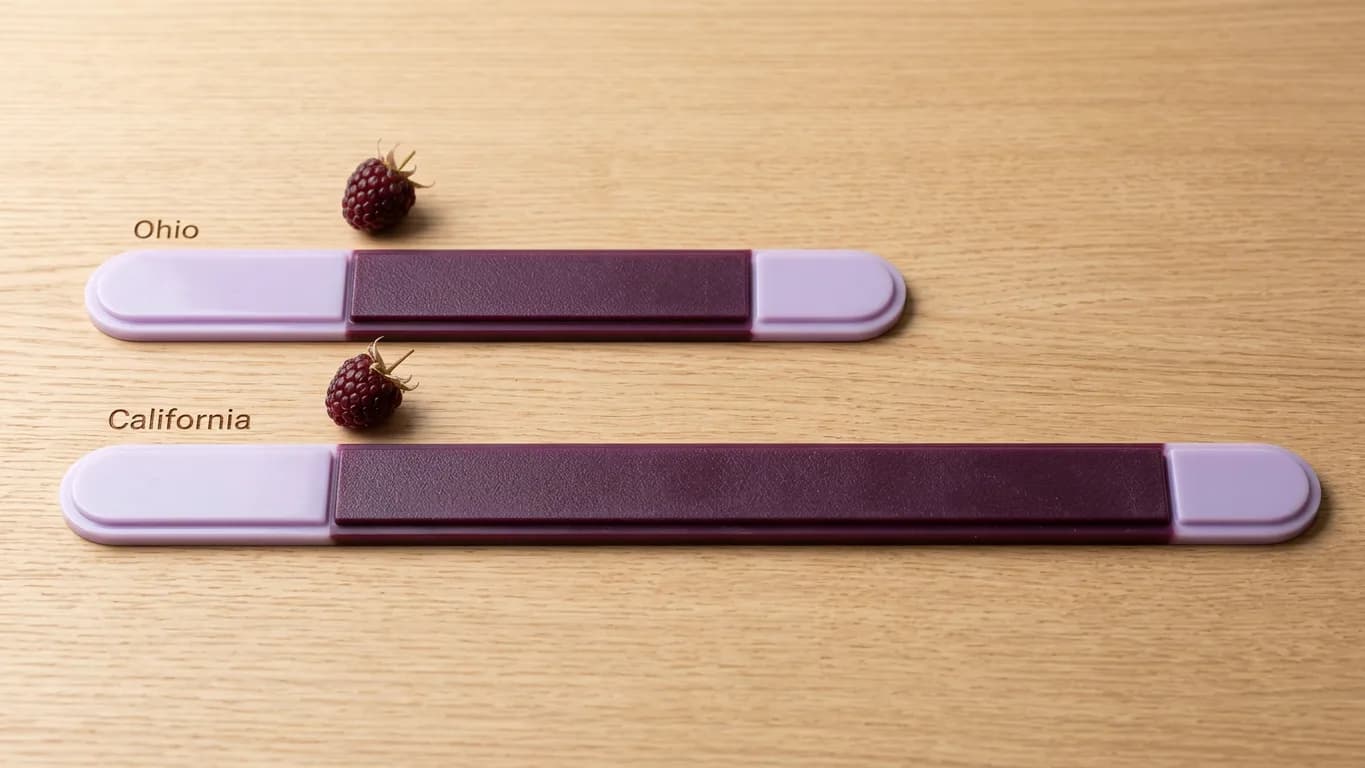
Because the pay sources are sequential and the protection is concurrent, the number people care about, how many weeks off and how many of them paid, depends almost entirely on the state. The table compares the same birth in a state with no program and in California, which has the fullest stack: State Disability Insurance for up to 4 weeks before the due date and 6 or 8 weeks after, then Paid Family Leave for 8 weeks of bonding, with job protection from the FMLA, the California Family Rights Act (12 weeks of bonding leave at employers with 5 or more), and Pregnancy Disability Leave (up to 4 months at employers with 5 or more) running underneath.
| Week of leave | Ohio (no state program), FMLA-eligible | California, FMLA- and CFRA-eligible |
|---|---|---|
| Up to 4 weeks before the due date | Unpaid unless a doctor certifies disability (then STD after the elimination period); FMLA runs if taken | SDI pays up to 4 weeks before the due date without a complication; PDL protects the job; FMLA runs |
| Elimination period (typically 7 days) | Sick days or PTO at full pay; FMLA runs | SDI has its own 7-day waiting period; sick days or PTO; PDL and FMLA run |
| Recovery: 6 weeks vaginal, 8 cesarean | STD at the plan percentage (median 60 percent), PTO top-up optional; FMLA runs | SDI at 70 or 90 percent of wages by income band, capped; PDL and FMLA run |
| Bonding after recovery | Unpaid, or a company parental policy, or PTO; FMLA runs until week 12 from the first day of absence | PFL pays 8 weeks at 70 or 90 percent; CFRA protects 12 weeks of bonding leave separately from PDL |
| Typical total | 12 weeks protected; 6 to 8 of them paid at 60 percent, the rest by PTO or unpaid | Up to about 7 months protected across PDL (up to 4 months) and CFRA (12 weeks); up to 19 weeks paid by SDI and PFL |
What does a paid maternity leave look like in practice? A worked example
Aisha is a pharmacy technician in Columbus, Ohio, earning $1,100 a week at a chain with 300 employees. She has been there three years, is enrolled in the company's group STD plan (7-day elimination period, 60 percent, 26-week benefit period, employer-paid premium), and her baby is due in early June. Ohio has no state paid leave or disability program, and her employer has no separate parental leave policy. Her plan is 12 weeks off. She gives HR notice in April; HR issues the FMLA eligibility and designation notices, confirming 12 weeks of FMLA leave for birth and bonding, and sends the STD claim packet so the physician statement can be completed at delivery.
She works until the Friday before her due date and delivers by cesarean on the Tuesday. Week one is the elimination period, covered by five sick days at full pay. Weeks two through eight are the certified recovery period for a cesarean, and the plan pays $660 a week, taxable because the employer pays the premium; she uses one PTO day a week to add $220 and reach $880. Weeks nine through twelve are bonding. No insurance covers them, so she spreads her remaining eight PTO days across the four weeks, two a week, and receives $440 a week. Over the 12 weeks she has received $4,620 from the plan and $4,400 in sick and PTO pay against $13,200 of normal wages, has used 5 sick days and 15 PTO days, and has exhausted her FMLA entitlement for the year. Her position and health insurance were protected throughout by the FMLA, not by the plan.
Move Aisha to Sacramento with the same employer and the same wage. SDI pays her from four weeks before the due date at 90 percent (she is in the lower income band), after a one-week waiting period she covers with sick days, through eight weeks of cesarean recovery. PFL then pays eight weeks of bonding at the same rate. Her leave runs 20 weeks, 19 of them paid by the state at roughly $990 a week, with PDL protecting the pregnancy disability portion, CFRA protecting the bonding weeks, and the FMLA running through the first 12. She uses five sick days and no PTO. Same employer, same plan, same baby; the state is the whole difference, which is why the state grid and the paid leave pages in this cluster exist.
What are my rights at work during pregnancy?
Three federal laws sit underneath the pay question. The Pregnancy Discrimination Act of 1978 makes it unlawful to treat pregnancy, childbirth, or related conditions worse than other temporary disabilities in any term of employment, which is the rule that puts pregnancy inside your STD plan and keeps it inside your sick leave and light-duty policies. The Pregnant Workers Fairness Act, in force since June 2023 for employers with 15 or more employees, requires reasonable accommodations for known limitations related to pregnancy and childbirth, such as schedule changes, seating, lifting limits, and time off for recovery, unless they impose an undue hardship, and it forbids forcing an employee onto leave when another accommodation would work. And the FMLA protects 12 weeks of leave for prenatal care, incapacity due to pregnancy, birth, and bonding within the first year, for eligible employees at covered employers.
For a non-birthing parent, the disability plan is irrelevant and the stack is the FMLA (12 weeks of bonding, unpaid), state paid family leave where it exists, and a company policy. Two parents at the same FMLA-covered employer share a combined 12 weeks for bonding, though each keeps a separate 12 weeks for their own or a family member's serious health condition. Adoption and foster placement qualify for FMLA and state paid family leave bonding on the same terms as birth, without the disability weeks. Our leave of absence hub links the guides for each of these situations as they publish.
Pregnancy Discrimination Act, 42 U.S.C. 2000e(k); Pregnant Workers Fairness Act, 42 U.S.C. 2000gg ff. (in force June 27, 2023, employers with 15 or more) and EEOC final rule, 29 CFR Part 1636; FMLA, 29 CFR 825.120 (birth and bonding, combined 12 weeks for spouses at one employer), 825.207 (substitution of paid leave). Plan medians: BLS National Compensation Survey, March 2024 (60 percent; $1,000 weekly maximum; 26-week median benefit period). Paid family leave access: BLS, March 2023 (27 percent). California: EDD (SDI up to 4 weeks before the due date and 6 or 8 weeks after, PFL 8 weeks, 70 or 90 percent by income band), Gov. Code 12945 (PDL) and 12945.2 (CFRA). Postpartum durations describe standard insurer guidelines, not a statutory rule. Checked September 2026. This article explains US federal and state leave law at a general level and is not legal advice. State program rules, benefit rates and caps change, usually each January, so confirm the current figures with the agency that runs the program or with qualified counsel.
Frequently asked questions
- How many weeks of short-term disability do you get for pregnancy?
- Typically 6 weeks after a vaginal delivery and 8 weeks after a cesarean, counted from the delivery date, after the plan's elimination period (usually 7 days). Complications extend the period on the doctor's certification, and prenatal weeks are covered when a physician certifies you cannot work. The plan's overall benefit period, usually 13 or 26 weeks, is the ceiling.
- Can I get short-term disability if I am already pregnant?
- Usually only if you were enrolled before the pregnancy began. Late enrollees face a pre-existing condition exclusion for the first 12 months, and individual policies impose a 9- or 10-month maternity waiting period. If you are already pregnant and not enrolled, plan on state paid leave (where it exists), a company policy, and PTO for this birth.
- Does short-term disability cover maternity leave for the father or partner?
- No. Disability insurance pays only for the insured person's own medical inability to work, and a non-birthing parent is not disabled by the birth. A partner's paid time comes from state paid family leave in the 13 jurisdictions that run it, a company parental leave policy, or PTO; the FMLA protects 12 weeks of unpaid bonding leave for eligible employees.
- Can you use FMLA and short-term disability at the same time for maternity leave?
- Yes, and you normally do. The FMLA protects the job from the first day of absence and the disability plan pays for the certified recovery weeks; the employer designates the FMLA leave and the weeks run concurrently. When recovery ends before the 12 FMLA weeks do, the remaining weeks are protected bonding leave, paid by state paid family leave, a company policy, PTO, or not at all.
- Is short-term disability for maternity leave taxable?
- It follows the premium rule. If your employer pays the premium or you pay it pre-tax, the maternity benefit is taxable income and subject to Social Security and Medicare tax in the first six months. If you pay the premium with after-tax dollars, the benefit is tax-free. Our short-term disability tax guide has the details and a worked example.
- What if my employer does not offer short-term disability?
- In a state with paid medical leave or disability insurance (13 PFML jurisdictions plus Hawaii), the state program pays your recovery weeks. Elsewhere the recovery is paid only by accrued sick leave and PTO or a company policy, and the FMLA protects the job if you are eligible. An individual STD policy bought before conception can fill the gap for a future pregnancy, subject to the maternity waiting period.
About the author
Jovana Avramovic
Product Excellence, Time-Out Zone
Jovana writes hands-on guides to time-off workflows, calendar tooling, and the rules behind vacation, sick leave, and payouts.
Related
A maternity leave with every layer on one timeline
Time-Out Zone lays out the elimination week, the disability weeks, the bonding weeks, the PTO used, and the FMLA hours on a single leave case, so the employee and HR see the same plan before the due date.